
A Missouri basement can be one of the most valuable parts of your home—or the most frustrating. In St. Louis, we see both extremes: basements that feel damp and forgotten, and basements that live like the main level—warm, refined, and built to last.
This guide walks through basement remodel ideas for Missouri homes, but more importantly, it explains how to execute them with precision: what to prioritize, what to avoid, and how we turn unfinished square footage into the kind of space your family naturally gravitates toward.
Why Missouri Basements Need a Different Approach
St. Louis soil, humidity, and seasonal swings
Greater St. Louis homes—whether you’re in Kirkwood, Webster Groves, Clayton, Chesterfield, or out toward St. Charles—share a common reality: our basements live in a challenging environment. Humid summers, freeze-thaw winters, and clay-heavy soils can work moisture toward foundation walls and slabs. Even “mostly dry” basements often carry enough seasonal humidity to cause musty smells, swelling trim, or that slightly clammy feeling underfoot.
That’s why a basement finishing project here has to start with building science, not décor. The goal is to control water and vapor, manage air movement, and then build finishes that can handle real life below grade.
The “dry first, beautiful second” mindset that protects your investment
A basement can look stunning on day one and still fail if it was finished like a first-floor family room. We’ve torn out enough “brand-new” work done without moisture strategy to know this: the best basement remodel ideas in Missouri only succeed when the space is protected at the foundation level.
Before we talk layout or finishes, we want to answer a few practical questions:
Where does water go during a heavy St. Louis storm?
What’s the current humidity level in summer?
Is there a sump system, and is it properly configured?
Are there signs of efflorescence (mineral deposits), past seepage, or mold?
How will insulation and vapor control be handled so walls don’t trap moisture?
Get those answers right, and everything that follows—trim, flooring, cabinetry, even the air you breathe—performs better.
Start With Moisture Control, Air Quality, and Comfort
This is the part homeowners rarely get excited about, but it’s where quality basement remodeling is won. The most expensive finishes in the world don’t matter if the space isn’t dry, stable, and comfortable.
Exterior water management (grading, gutters, downspouts)
Many “basement problems” start outdoors. We routinely see downspouts dumping water right next to the foundation or grading that pitches back toward the home. It’s a simple concept: keep bulk water away first.
What we look for—and often recommend fixing before finishing:
Positive grading away from the foundation
Clean gutters and properly sized downspouts
Extensions or buried lines that carry roof water well away from the home
Window well drainage for below-grade windows
Cracked driveways/walkways that funnel water toward the house
This isn’t glamorous work, but it’s foundational. If a basement remodel in St. Louis ignores exterior drainage, you’re asking interior systems to fight a battle they shouldn’t have to.
Interior protection (sump systems, vapor control, dehumidification)
Inside, we design the basement like a controlled environment:
Sump and pump reliability: Proper basin, quality pump, check valve, and—depending on the home—battery backup.
Vapor control strategy: Not every wall assembly is the same. The wrong approach can trap moisture where you can’t see it.
Dehumidification: In Missouri, a dedicated dehumidifier or integrated HVAC strategy is often what makes a basement feel crisp instead of clammy.
Air quality: We think through supply/return air, filtration, and how the basement interacts with the rest of the house.
A well-designed system is quiet, consistent, and invisible—exactly how it should be.
Materials that belong in a Missouri basement (and the ones that don’t)
Below grade, material choice isn’t a style decision—it’s a durability decision.
Basement-friendly choices we trust:
Flooring systems designed for basements (often LVP, tile, or carpet with the right pad, depending on use)
Moisture-resistant drywall where appropriate, installed within a wall system that’s designed correctly
Cabinetry and trim details planned with humidity in mind
Mold-resistant insulation strategy based on the wall assembly—not a one-size-fits-all approach
Common mistakes we avoid:
Direct-to-concrete finishes that feel cold and amplify moisture
Wall systems that trap vapor against foundation walls
“Pretty” materials that don’t belong below grade without proper protection
If you want your basement remodel to feel like the main level, you build it like a basement first—then elevate the finishes.
Smart Basement Layout Planning That Feels Like the Rest of Your Home
A basement can be large and still feel awkward if the layout is an afterthought. The best finished basements in St. Louis feel intuitive: you come downstairs and the space makes sense immediately.
Zoning the space: loud, quiet, wet, and storage areas
We start by dividing the basement into functional zones:
Loud zone: media room, game table, kids’ area
Quiet zone: office, reading nook, guest suite
Wet zone: bar, kitchenette, bathroom (near plumbing where possible)
Storage + mechanical: designed to be accessible, organized, and cleanly framed—not a chaotic leftover
This keeps the basement comfortable for real life. Someone can watch a movie while another person works out or takes a call without everything bleeding together.
Working around beams, ductwork, and low ceilings
Every St. Louis basement has constraints: beams, soffits, ducts, plumbing stacks. The difference between “basement-y” and “built” is how those constraints are handled.
Our approach is design-forward:
Align soffits intentionally so they look planned, not patched
Use ceiling details and lighting to draw the eye away from low points
Place seating and focal walls where ceiling height is strongest
Create built-ins that feel architectural, not decorative
Done right, the room reads clean and level—even if the structure above isn’t.
Stair placement, circulation, and sightlines
The stair landing is often the first impression. We look at:
Where the eye naturally lands at the bottom of the stairs
Whether you step into a wide-open space or a tight corridor
How light moves from the main level into the basement
Where feature elements belong (media wall, bar, fireplace, art niches)
That first view matters. It’s where a basement starts to feel intentional.
Basement Remodel Ideas That Fit St. Louis Homes and Lifestyles
In St. Louis neighborhoods, we see basements used in ways that match the rhythm of the family: entertaining on weekends, kids spreading out after school, quiet corners for work, and guest space that doesn’t feel like a compromise.
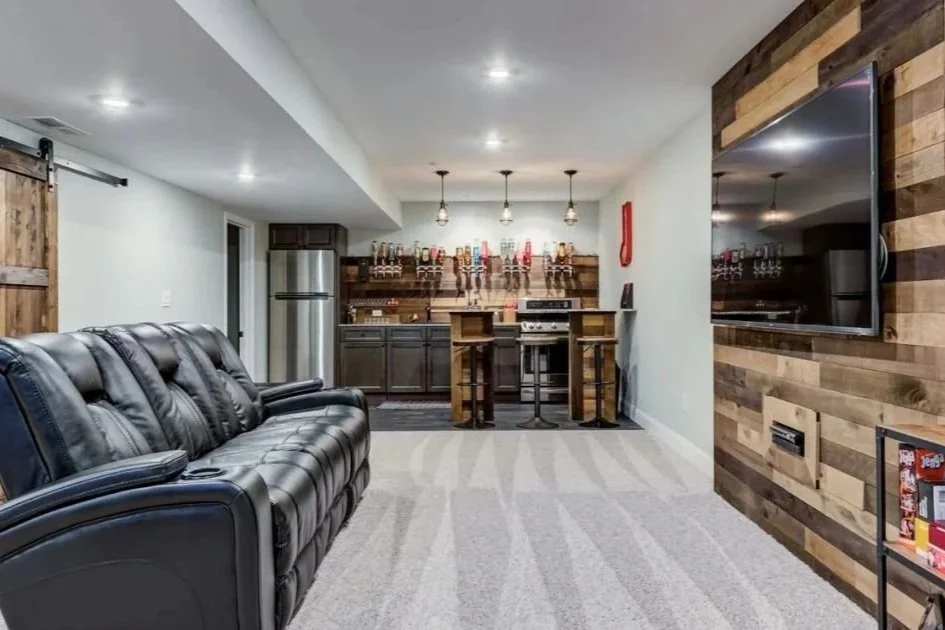
A refined family room with a built-in media wall

A media wall can anchor the entire basement—especially in long, open footprints common in Missouri homes.
What makes it feel high-end:
A balanced wall composition: TV centered, cabinetry scaled correctly, minimal visual clutter
Power and low-voltage planning: outlets, conduit, hidden cable paths, soundbar placement, Wi-Fi coverage
Material selection: wood accents, stone, or painted millwork that matches the home’s style
Lighting control: dimmable, warm temperature, no glare on the screen
The result is a space that feels like a destination, not a default.
A basement bar or kitchenette for entertaining
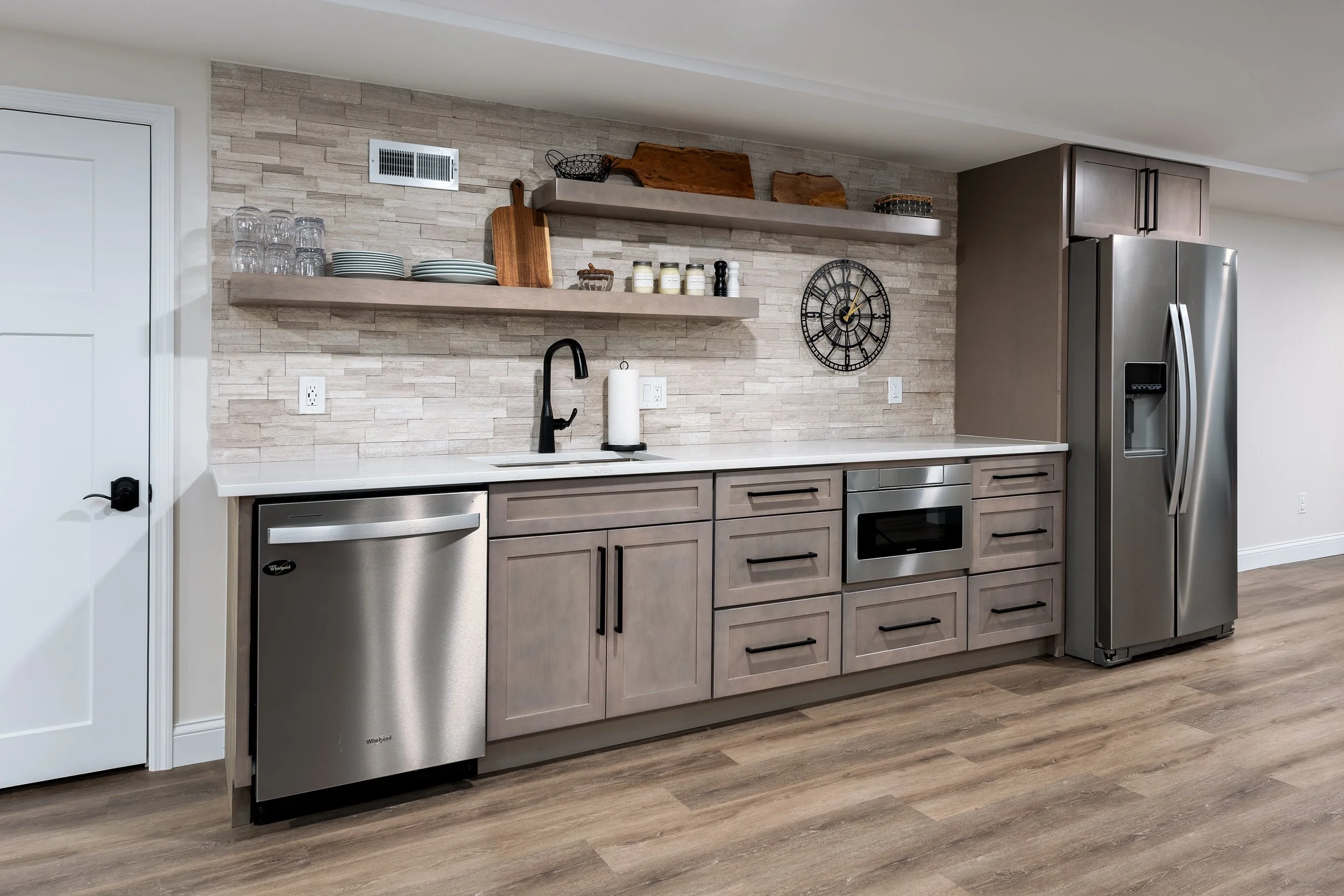
St. Louis homeowners love an entertaining basement—especially in areas like Town and Country, Des Peres, and Ladue where hosting is part of the lifestyle. A basement bar works best when it’s designed like a real kitchen zone, not a novelty corner.
What we build for performance and longevity:
Durable countertop materials that hold up to spills and heavy use
Proper plumbing planning (and realistic expectations for drainage)
Thoughtful appliance placement: beverage fridge, ice maker, microwave drawer if the space calls for it
Storage that’s actually useful: glassware, serving trays, snack drawers
Backsplash and lighting that make it feel finished, not improvised
A well-built basement kitchenette makes the entire lower level easier to live in—no constant trips upstairs.
Home gym with durable finishes and proper ventilation
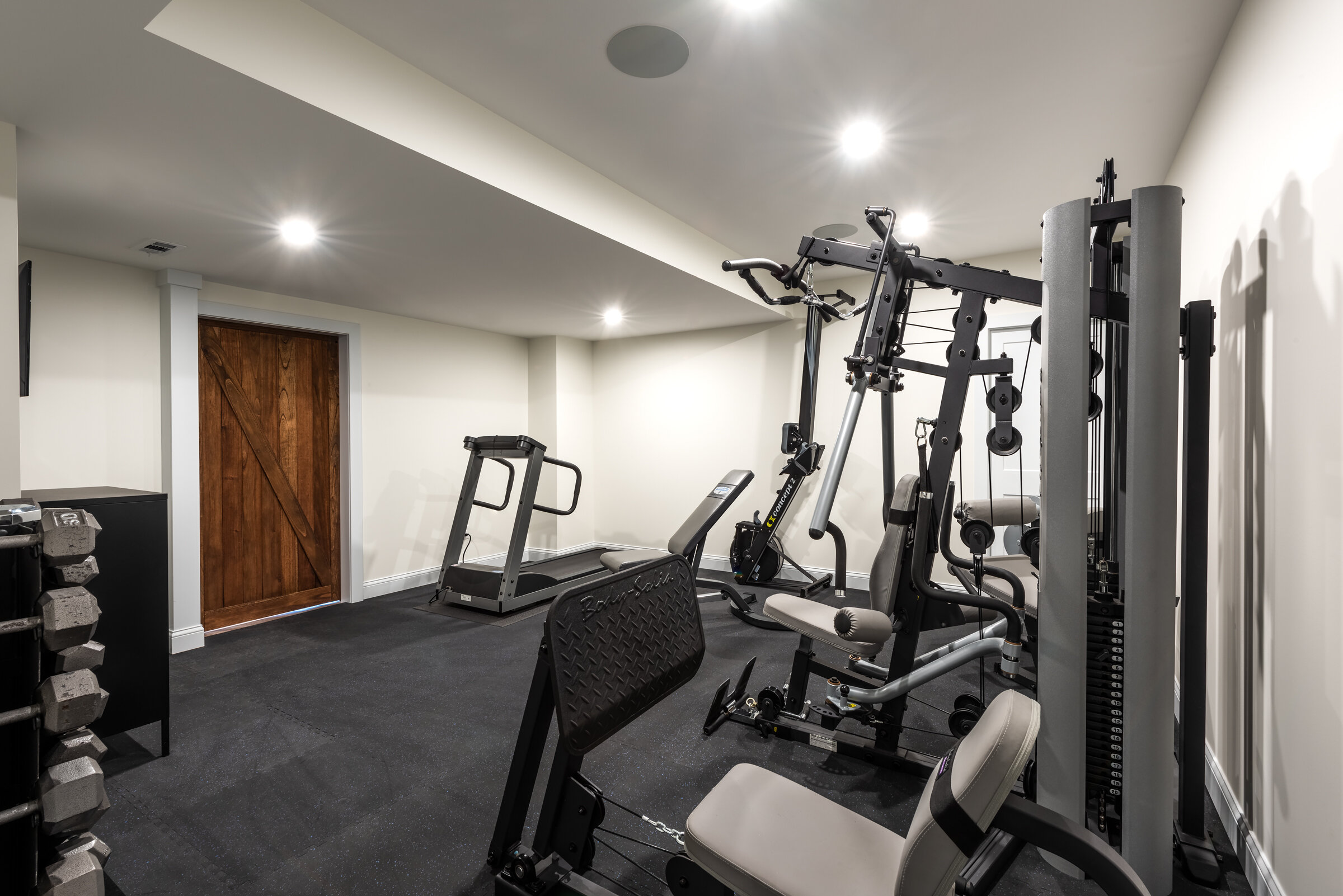
A home gym in the basement is practical, private, and easy to integrate—if you treat it like a performance space.
Key considerations:
Flooring designed for impact and stability
Mirror and lighting layout for function (not harsh, not dim)
Ventilation strategy so it doesn’t smell like yesterday’s workout
Sound control to keep treadmills and weights from telegraphing through the house
This is where craftsmanship matters: the gym shouldn’t feel like it’s “in the storage area.”
Guest suite or in-law space with privacy and code-compliant egress
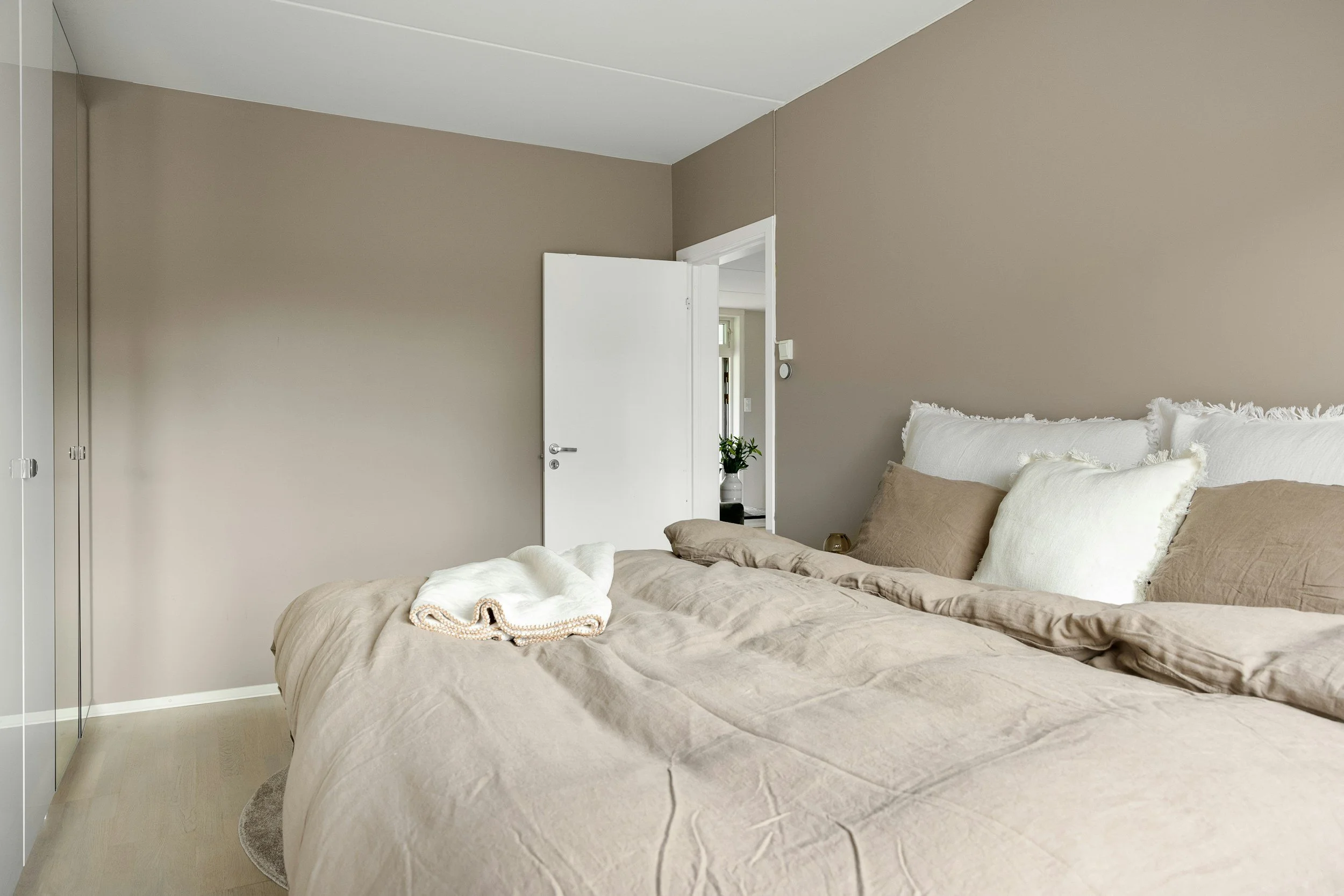
If you’re building a basement bedroom in Missouri, egress is non-negotiable. Beyond code, guests need comfort and dignity: light, storage, and a bathroom that feels like it belongs.
We focus on:
Proper egress window sizing and placement
Sound separation from loud zones
A closet strategy that doesn’t steal all the usable square footage
Bathroom finishes that match the quality of the main floor
In older homes around Webster Groves or the city’s historic neighborhoods, this kind of space can transform how the home functions for multi-generational living.
Kids’ hangout + homework zone that evolves
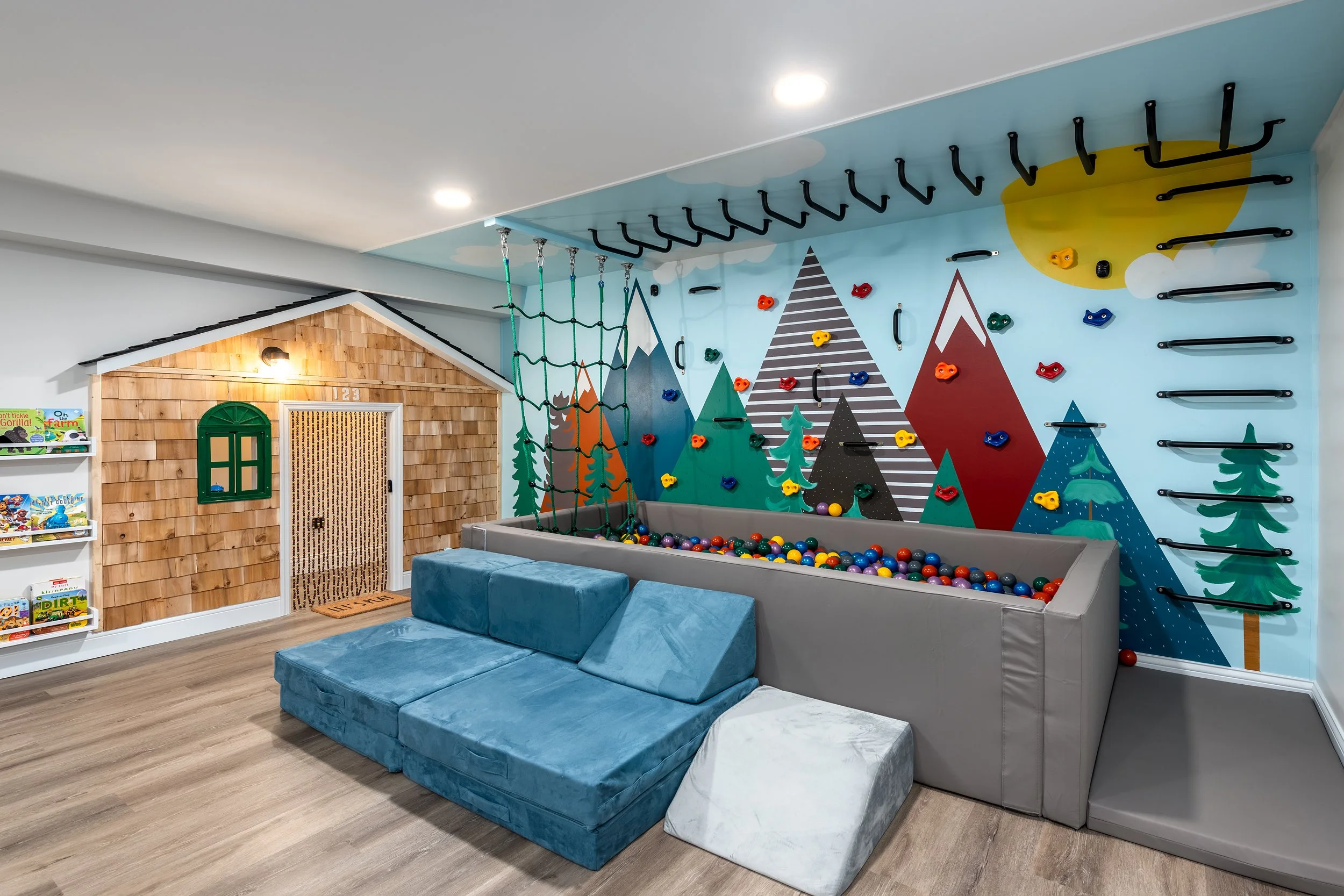
Families often want a basement that’s flexible: a place to play now, and a place to hang out later.
We design for:
Built-in storage that keeps clutter under control
Durable wall finishes and flooring choices
A homework counter with real task lighting
Open space that can adapt to a future media setup, lounge, or game area
This is a smart investment because it stays useful through different life stages.
Home office / studio / hobby room with sound control
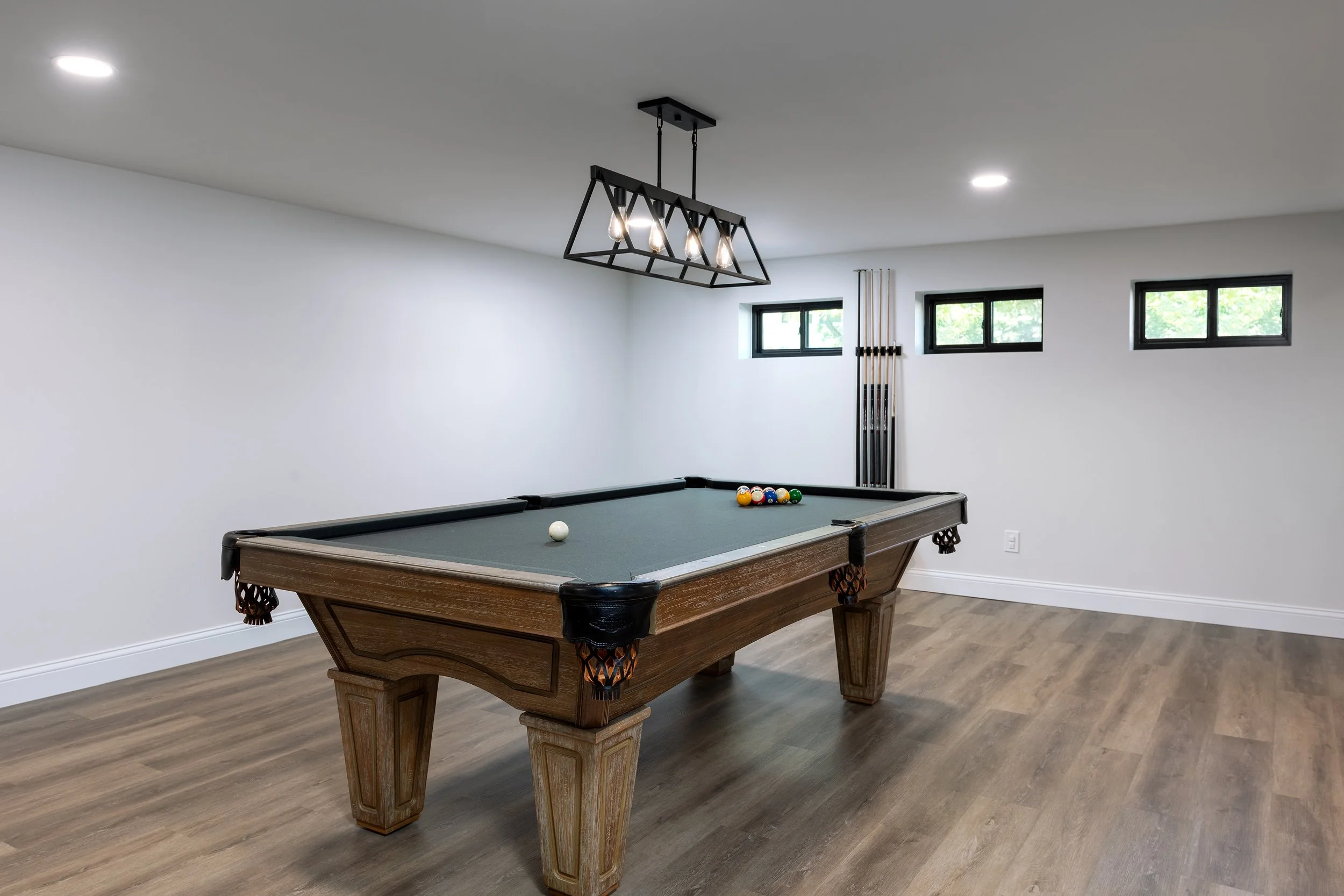
Basement offices succeed when they don’t feel like a compromise.
We use:
Layered lighting and warmer finishes to counteract the lack of natural light
Acoustic strategies—especially if the office sits under a busy kitchen or family room
Data and power planning (outlets where you need them, not where they were easiest)
For musicians, makers, or collectors, we can tune the room for the craft—sound, dust control, storage, and display.
Wine wall, tasting nook, or speakeasy-style lounge
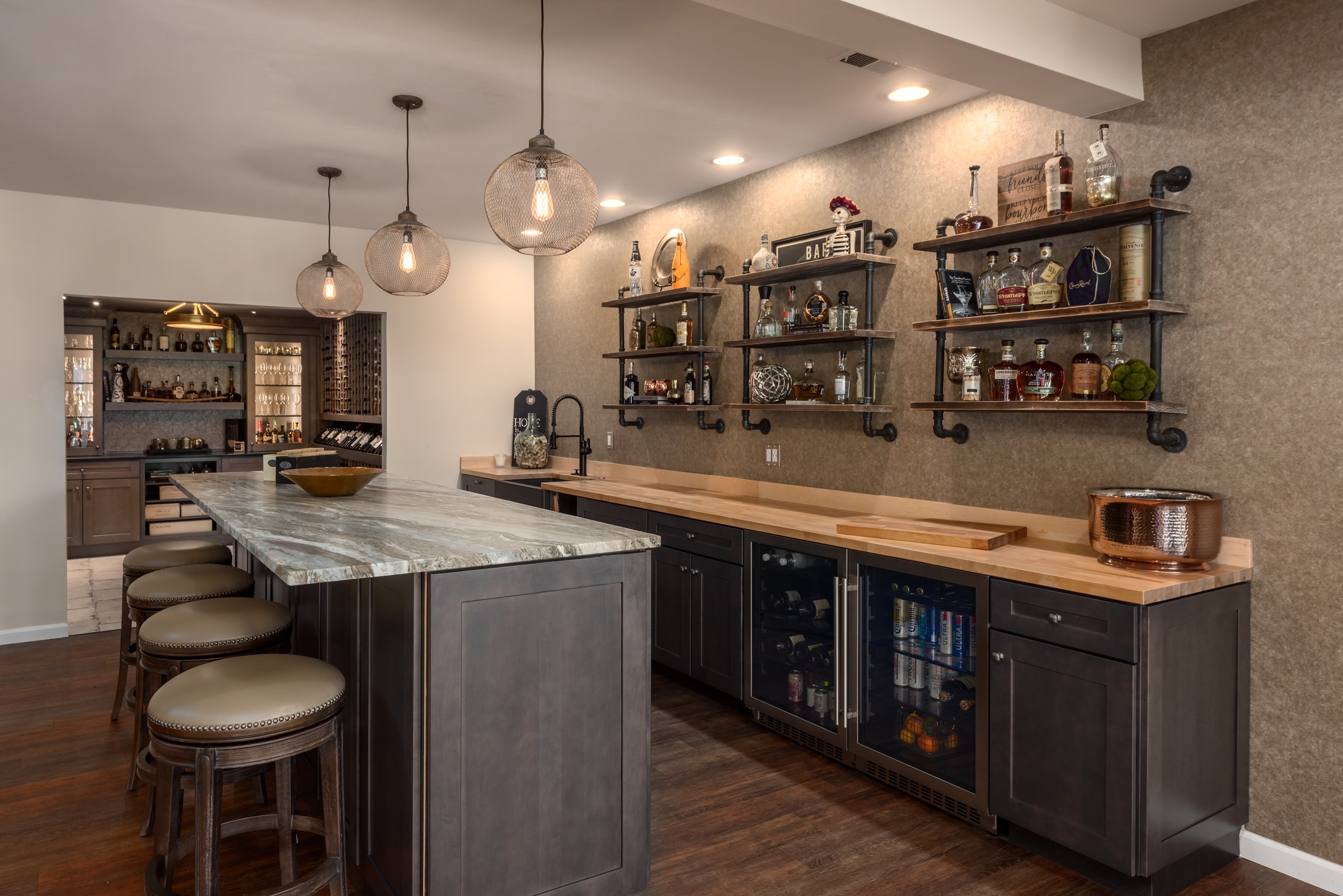
These are the spaces homeowners remember—when they’re done with restraint and craftsmanship.
Done well, this is about:
Temperature and humidity considerations
Lighting that flatters wood and glass
Millwork precision: reveals, alignment, consistent grain direction
Seating and circulation that make it feel like a real room, not a themed corner
The best version feels timeless, not trendy.
Details That Separate “Finished” From “Exceptionally Built”
This is where most basements either become “nice enough” or become exceptional. The difference is rarely one big decision. It’s dozens of small, correct decisions stacked on top of each other.
Lighting design: layers, warmth, and glare control
Basements need lighting design, not just lighting. We typically layer:
Ambient recessed lighting (placed intentionally, not in a grid by habit)
Accent lighting at built-ins, bar shelves, or wall features
Task lighting for office counters, game tables, and gym zones
We also pay attention to color temperature and dimming compatibility so the space can shift from bright and energetic to calm and cinematic.
Flooring systems that stay comfortable and stable
Basement floors in Missouri need to be chosen for moisture tolerance, comfort, and acoustics.
Common solutions we consider based on use:
Luxury vinyl plank (LVP): great durability and moisture resistance
Tile: ideal in wet areas and bathrooms
Carpet: excellent comfort and sound absorption when paired with the right pad and used in the right zones
We’re careful about what goes directly over concrete and how transitions are handled so the floor looks continuous and intentional.
Trim carpentry, doors, and built-ins
Craftsmanship shows up fast in trim. We focus on:
Straight, consistent reveals
Clean corner detailing
Door and hardware selection that matches the home’s style
Built-ins that look architectural, not “installed later”
When the trim work is right, the basement stops feeling like an add-on.
Soundproofing strategies that actually work
Sound control is one of the best quality-of-life upgrades in a finished basement—especially under open kitchens and family rooms.
Depending on the structure, we may use:
Insulation in key cavities
Resilient channels or sound-damping layers where they’re most effective
Solid-core doors for offices and guest suites
Strategic layout decisions (placing loud zones away from bedrooms)
The goal isn’t a recording studio. The goal is comfort.
The best basement remodel ideas for Missouri homes aren’t just a list of features—they’re a strategy. Control moisture. Plan the layout like it’s a true living level. Choose materials that belong below grade. Then finish it with the kind of craftsmanship that makes the space feel inevitable, like it was always meant to be there.
If you’re considering basement finishing in St. Louis—whether you want a refined family room, a bar built for entertaining, a guest suite, or a flexible space that grows with your family—start with a plan that respects the structure and the climate. That’s how you get a basement that stays beautiful.