
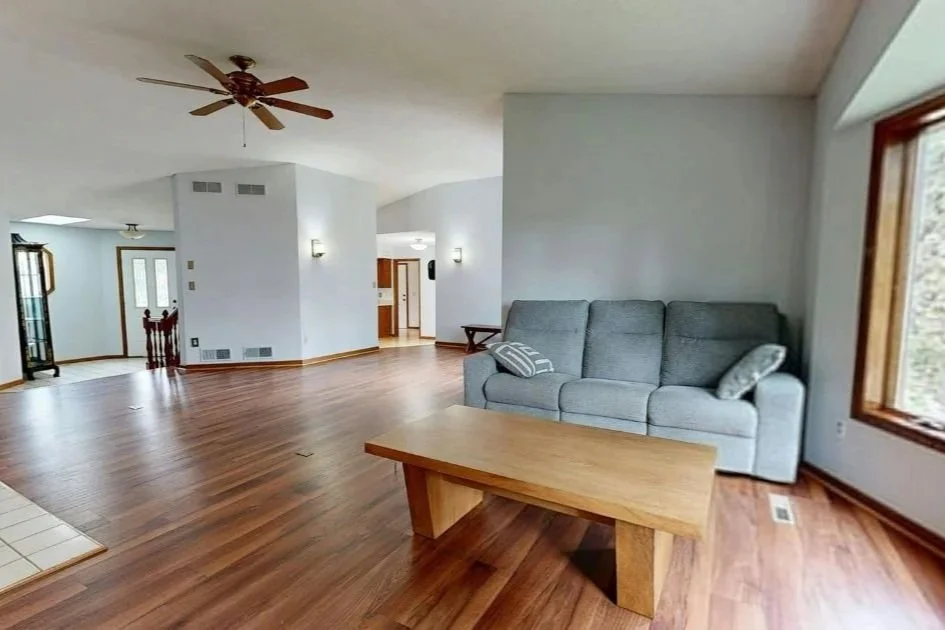
Hardwood floors have a way of telling the truth about a home. They show where life happens—where kids launch down the hallway, where the dog waits by the back door, where guests gather near the kitchen. In the Greater St. Louis area, we see everything from century-old oak in Webster Groves to wide-open main levels in Wildwood and Chesterfield where sunlight pours across the grain all day long.
At Morganco Design Build, we’re third-generation builders. We’re not interested in “good enough,” especially when it comes to surfaces you live on every day. Hardwood floor refinishing is one of those projects that looks simple on paper—sand, stain, coat—but the difference between average and exceptional is in the details: how flat the floor is after sanding, how consistent the color reads from room to room, how clean the finish lays down, and how well it holds up after the first St. Louis summer humidity swing.
What is Hardwood Floor Refinishing
Hardwood floor refinishing is the craft of bringing real wood floors back to life by removing the worn-out surface, correcting imperfections, and then rebuilding a fresh, protective finish system.
In practical terms, it includes:
Sanding off the old finish (and a very thin layer of wood) to erase dullness, scratches, and uneven sheen
Repairing problem areas like split boards, soft spots, stains, squeaks, or old patches that don’t blend
Refining the surface so the floor is smooth, consistent, and ready to accept color evenly
Applying stain (optional) to shift the tone—lighter, warmer, deeper, or more natural
Sealing and topcoating to create the durable “wear layer” that protects the wood from daily life
Done right, refinishing doesn’t just make floors look “new.” It restores the depth of the grain, improves how light moves across the room, and gives you a finish that’s built to handle real St. Louis living—kids, pets, entertaining, and our seasonal humidity swings—without replacing the floor itself.
When refinishing is the right move (and when it isn’t)
Refinishing is usually the best choice when:
The floor has surface scratches, dulled areas, gray traffic lanes, or uneven sheen.
You want to change stain color or move from an ambered look to a clearer, more modern tone.
There are localized stains or pet wear that can be sanded out or repaired.
The floor is structurally sound and thick enough for sanding.
Refinishing may not be the right move when:
The wood is too thin (common with older floors that have been sanded multiple times).
There’s significant cupping/crowning from moisture issues that haven’t been solved.
The floor has widespread deep staining (urine, water intrusion, iron stains) that penetrates beyond the sandable layer.
The layout needs major changes—patches everywhere, walls removed, or large additions that make matching difficult.
We’ll talk later about how we evaluate thickness and repair feasibility, because that’s where an honest plan starts.
What “good refinishing” actually means—flatness, color, clarity, and durability
A refinished floor should feel calm. Not wavy. Not patchy. Not shiny in one corner and cloudy in another.
Quality hardwood floor refinishing comes down to:
Flatness: Floors aren’t supposed to look like rolling hills when light hits at an angle. Proper sanding levels minor lippage and blends transitions.
Scratch pattern control: If the sanding sequence is rushed, you’ll see “chatter” or swirl marks forever—especially with darker stains.
Color consistency: Stain should read evenly across boards and across rooms. That requires thoughtful prep, testing, and the right sealer strategy.
Clean finish build: Dust nibs, debris, and bubbles aren’t “normal.” They’re signs the workspace wasn’t protected and the finish wasn’t laid with care.
Durable topcoat system: The finish is the floor’s armor. The number of coats, dry time between them, and the right product selection matters more than most homeowners realize.
What St. Louis Homes Ask of Hardwood Floors
St. Louis is hard on wood in a specific way: we get real seasons. Humid summers, dry winters, and quick shoulder-season swings. Wood expands and contracts. Floors move. If a refinishing plan ignores that reality, the finish may look beautiful on day one and frustrated by year two.
Humidity swings, seasonal movement, and why gaps appear
Gaps in winter and tighter boards in summer are common here—especially in older homes in Clayton, University City, and Kirkwood where framing and HVAC upgrades have evolved over decades. Refinishing won’t “fix” seasonal movement, but the right approach can keep it from becoming a finish problem.
What we look for:
Stable indoor humidity and HVAC performance
Signs of moisture entry (basement humidity, door thresholds, older windows)
Floor direction and how sunlight hits it (south-facing rooms can show finish wear faster)
Common wood species in St. Louis—oak, maple, pine—and how each finishes
Red/White Oak: The most common. Takes stain well, hides wear better, and offers a classic grain pattern that fits both traditional and modern St. Louis interiors.
Maple: Beautiful, but less forgiving. It can stain blotchy without the right prep and sealer plan.
Pine (often in older homes): Softer, dents more easily, and can require a different expectation of “perfect.” We treat pine with respect—done right, it’s warm and timeless.
Older neighborhoods vs. newer builds: subfloors, squeaks, and surprises
Older homes often bring:
More character—and more variation board-to-board
Subfloor irregularities, squeaks, and past repairs
Radiator or old wall locations that left patched areas
Newer builds tend to bring:
Larger continuous spans that highlight sanding and finish consistency
Open plans where color matching across spaces is critical
Faster wear in high-traffic zones like kitchens and mudroom entries
Refinishing vs. Replacing
This is where we get practical. The right decision protects your budget and your long-term satisfaction.
Thickness and wear layer: can your floors take another sanding?
Solid hardwood typically can be sanded multiple times—if there’s enough material left above the tongue-and-groove. Engineered hardwood depends on veneer thickness; some can be refinished, many cannot.
A responsible pro will:
Inspect floor thickness at a vent or threshold
Look for exposed nails, soft spots, or prior aggressive sanding
Tell you plainly if refinishing is a risk
Cupping, crowning, staining, pet damage, and repairs
Cupping/crowning: We identify whether it’s active moisture or a past event. Sanding too early can lock in problems.
Pet stains: Some can sand out. Deep stains may require board replacement or a design strategy (darker stain, strategic lacing-in).
Water stains and black marks: Often deeper than they look. We’ll be honest about what disappears and what becomes a “story mark” unless boards are replaced.
Layout improvements and design upgrades during refinishing
Refinishing is also the moment to elevate the design:
Remove a dated border or patchwork tone by re-staining consistently
Change sheen to soften glare in bright rooms
Address transitions, thresholds, and stair nosings for a cleaner flow
Coordinate floor tone with new cabinetry, trim, or a remodel plan
If a homeowner is already planning a kitchen or main-level remodel, floor refinishing becomes part of a single, intentional design—not a separate project that fights the rest of the home.
Hardwood Refinishing Process
A great finished floor is the result of a controlled process. Here’s what that looks like when it’s done with discipline.
Site protection and dust control (how a job stays clean)
Before sanding begins, we protect:
Doorways and adjacent rooms (containment matters)
Return-air pathways (to keep dust out of your HVAC system)
Baseboards, cabinetry, and stair parts that stay in place
Many homeowners ask about “dustless refinishing.” No system is truly dust-free, but proper containment, modern extraction, and clean work habits make a night-and-day difference in how your home feels during the project.
Sanding sequence: flattening first, then refining
Sanding isn’t one pass—it’s a progression:
Flattening cut: Removes old finish and levels minor unevenness
Intermediate cuts: Refines the scratch pattern, addresses edge blending
Final sanding: Leaves the floor ready to accept stain evenly
Screening/buffing: Preps between coats for adhesion and smoothness
Rushing the sequence creates visible sanding marks that show up under sunlight and dark stain—especially in open plans.
Edges, corners, and details—where craftsmanship shows
The edges of a room are where shortcuts live. We take the time to blend field sanding with edge work so the perimeter doesn’t read like a different floor. It’s slower. It’s also the difference between a professional job and one you can’t unsee.
Repairs: board replacement, patching, and lacing-in
When boards are damaged, we don’t “fill and hope.” We:
Remove affected boards cleanly
Lace in replacements with proper orientation and fit
Feather sanding so repairs disappear into the floor
In older St. Louis homes, we often source matching widths and species to keep repairs authentic.
Stain and color testing: how we prevent “surprise” results
We don’t pick a stain from a brochure and roll the dice. We test:
In the actual lighting of your home
Against existing trim, cabinetry, and paint
With a sealer sample when needed (because sealer can shift tone)
That’s how you avoid the classic regret: “It looked perfect in the store.”
Sealer and topcoats: the build-up that makes a floor last
A durable system typically includes:
Optional conditioner or stain control (species-dependent)
Sealer: Locks color, improves uniformity, supports adhesion
Topcoats: Multiple coats for wear resistance and cleanability
Skipping sealer or shorting coats may look fine early, then fail where you walk most.
Cure time and re-entry: when you can walk, move furniture, and live normally
Most finishes allow careful foot traffic within a window—but full cure takes longer. We plan:
Walk-on timing
Furniture move-back strategy (especially heavy items)
Rug timing (rushing rugs can trap solvents and imprint the finish)
Choosing Your Finish System: Water-Based vs. Oil-Based Polyurethane
This choice impacts color, timeline, and how your home feels during the project.
Color tone, clarity, and ambering
Oil-based polyurethane: Warmer, richer tone; ambers over time. Beautiful in traditional St. Louis interiors and historic homes.
Water-based polyurethane: Clearer, more natural; less ambering. Excellent for modern palettes and natural oak looks.
Odor, dry time, and household disruption
Oil-based finishes generally have stronger odor and longer dry times. Water-based systems often allow a quicker project timeline and can be easier on occupied homes.
Durability in real life: kids, dogs, and entertaining
Durability depends on product quality and proper application. A carefully built finish system—proper sealer, correct coat count, and disciplined dry times—matters more than a label on a can.
Stain Color and Design Decisions That Age Well
St. Louis homes are a blend of brick tradition and evolving interiors. The floor should feel grounded, not trendy in a way you’ll want to undo.
Matching existing trim, cabinets, and brick interiors
Floors don’t live alone. We look at:
Warmth of existing woodwork
Brick undertones (common in St. Louis)
Cabinet color and countertop movement
Wall color in natural light vs. evening light
Sheen choices (matte, satin, semi-gloss) and what they hide
Matte/low sheen: Soft, forgiving, modern
Satin: The most balanced, popular choice for lived-in homes
Semi-gloss/gloss: Crisp but shows more scratches and dust
Trends in St. Louis homes: natural oak, warm browns, and muted neutrals
We’re seeing homeowners lean into:
Natural/near-natural oak that brightens a space
Warm medium browns that complement brick and traditional trim
Muted neutrals that play well with both modern and classic furnishings
Cost of Hardwood Floor Refinishing in St. Louis
Homeowners deserve clear expectations. Refinishing costs vary based on scope, floor condition, and finish system—not just square footage.
Square footage, floor condition, and repair scope
Heavy scratches, pet stains, uneven boards, and prior poor refinishing all add labor. Repairs done correctly take time, but they’re what keep a “pretty floor” from becoming a problem floor.
Stair refinishing and railing work
Stairs are detail work:
Treads/risers require careful sanding and consistent color
Railings and spindles are craftsmanship-intensive
The result can be dramatic—but it must be planned
Finish system and number of coats
More coats, better materials, and proper dry times often cost more—and last longer. That’s a trade we’ll explain upfront.
A realistic ballpark range (and how to compare bids apples-to-apples)
A common range homeowners may see for professional refinishing is several dollars per square foot into the high single digits, with repairs, stairs, and premium finish systems increasing investment. The smart way to compare bids is to compare:
Coat count and finish product quality
Included repairs and thresholds
Dust control and protection scope
Timeline and cure-time guidance
If a price seems too good to be true, it usually shows up later as visible sanding marks, thin finish, or rushed curing.
How to Protect Newly Refinished Hardwood Floors
A refinished floor is a craft surface. Treat it well early, and it rewards you for decades.
The first 30 days: cure time rules that matter
Avoid rugs too soon
Use felt pads immediately
Lift furniture—don’t drag
Keep humidity stable when possible
Cleaning products we trust (and what we avoid)
We recommend cleaning routines that protect the finish film. Harsh detergents, steam mops, and “quick shine” products can cause long-term issues.
Pads, rugs, humidity control, and long-term maintenance
Simple habits make a big difference:
Entry mats where St. Louis weather tracks in grit
Felt pads and periodic replacement
Humidity control to reduce seasonal movement
A maintenance recoat before the finish wears through in traffic lanes
Hardwood floor refinishing isn’t just restoration—it’s refinement. When it’s done with patience and a perfectionist’s eye, the floor becomes quiet in the best way: the boards read consistent, the sheen feels intentional, and the space looks elevated without looking “done.”
If you’re planning hardwood floor refinishing in St. Louis—especially as part of a broader remodel—build the plan around testing, protection, and a finish system that matches how your household actually lives. That’s how you get a floor that still looks right years from now, not just the week the furniture moves back.