
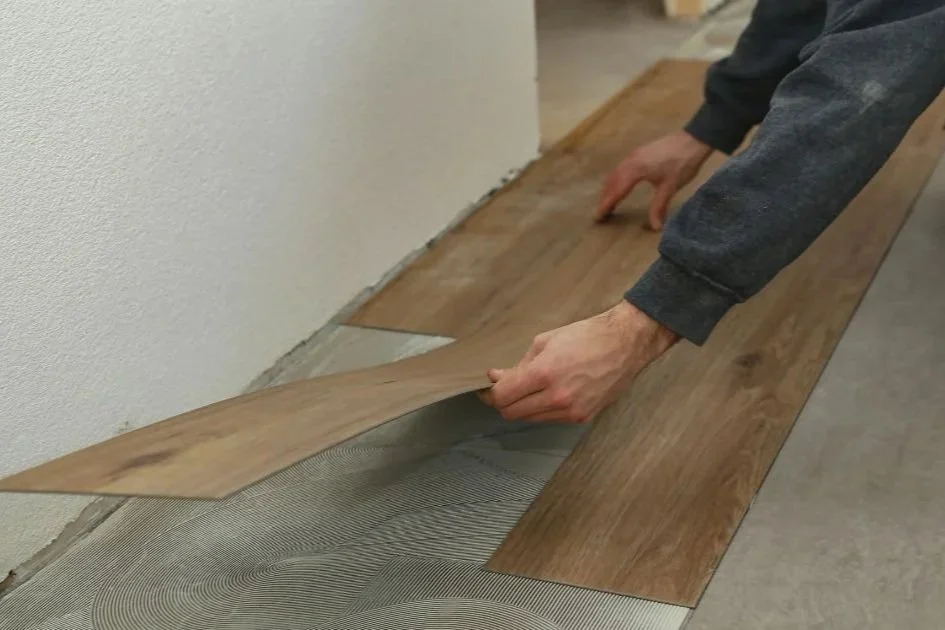
A well-installed LVP or vinyl floor has a certain quiet confidence to it. The planks lay flat, the seams disappear, the texture reads like real wood under St. Louis sunlight, and the space feels finished in the way a home should feel finished.
But here’s what most homeowners don’t hear until something goes wrong: vinyl and LVP don’t “wear out” from foot traffic nearly as often as they get slowly damaged by the wrong cleaning habits. Too much soap. The wrong disinfectant. A mop that pushes grit around like sandpaper. Or a “shine” product that leaves a sticky film that never truly comes off.
Let’s walk through the contractor-approved cleaners we trust, what to avoid, and exactly how to clean vinyl and LVP floors the way we do on finished projects across the Greater St. Louis area.
If you take one principle from this guide, make it this: vinyl and LVP prefer a neutral pH cleaner that rinses clean and leaves no residue. Most floor problems we’re called about—streaks, haze, “sticky” feel—trace back to residue, not dirt.
Below is the list we’re comfortable recommending because it aligns with how quality LVP/vinyl wear layers are engineered. We’re also including why each category works, so you can match the product to your home’s needs—whether you’ve got kids running in from the backyard in Sunset Hills or a dog who treats the foyer like a launchpad in Kirkwood.
1) Neutral pH “Daily Clean” Options
These are your dependable, low-risk choices for routine cleaning. They cut everyday grime without softening the finish or leaving a film.
What to look for
Neutral pH (not strongly alkaline or acidic)
No waxes or polishes
“No-rinse” can be fine if it truly doesn’t leave residue—but mixing ratios matter
Contractor-approved types
Manufacturer-approved LVP cleaners (often sold under the flooring brand’s name). These are designed specifically for that wear layer.
Neutral pH hard-surface floor cleaners labeled safe for luxury vinyl.
Why we like them
Neutral cleaners remove soils while staying gentle on the urethane wear layer. That wear layer is what gives LVP its durability and consistent sheen. You want to clean the surface—not slowly change it.
Where they shine in St. Louis homes
Great rooms with large windows (streaks show more)
Hallways and traffic lanes
Open kitchens where you clean frequently
2) Heavy-Duty Degreasing Options for Kitchens and Mudrooms
St. Louis kitchens work hard. Between cooking oils, pantry spills, and the fine dust that settles in high-traffic homes, you need something that cuts grease without turning the floor hazy.
What to look for
Degreasing power without bleach and without harsh solvents
A product that does not advertise “shine” or “gloss restoration” as its main feature
Contractor-approved approach
Use a neutral pH cleaner first
Step up to a vinyl-safe degreaser only when needed (weekly in some homes, monthly in others)
Why this matters
Grease is the enemy of clean floors because it bonds dust. If the wrong product leaves residue, you create a cycle: the floor looks dull, you clean more often, residue builds faster, and the “dullness” becomes permanent-looking.
Where this matters most
Mudrooms off the garage (especially in Ballwin, Wildwood, and other areas with active outdoor living)
Kitchens with islands where people congregate
Areas near ranges and pantry zones
3) Disinfecting Options That Won’t Dull the Finish
Homeowners often reach for strong disinfectants, especially in busy households. The risk is that many disinfecting products are either too harsh, too alkaline, or contain additives that leave a film.
What to look for
Disinfectants labeled safe for vinyl/LVP (and used per label instructions)
Avoid “all-purpose disinfecting sprays” that include bleach or heavy solvents unless the flooring manufacturer explicitly allows it
Best practice
Disinfect when needed (muddy pawprints, illness in the home, post-party cleanup), but keep “everyday cleaning” in the neutral pH lane. A floor can be clean without being chemically aggressive.
Where homeowners get into trouble
Overusing disinfectants in kitchens and baths until the finish looks cloudy
Mixing products (disinfectant + soap + fragrance boosters), which is a recipe for residue
4) What We Use on Job Sites After Installation
After installation, we’re not just cleaning dirt—we’re protecting the finish the homeowner is about to live on. Our post-install clean is designed to remove fine dust without scratching and without leaving anything behind that will attract dirt.
Our contractor-standard process
Microfiber dust mop first (captures grit instead of pushing it)
Neutral pH cleaner in a spray mop or lightly damp microfiber mop
Minimal water—especially along edges, transitions, and around islands
Clean microfiber pads swapped out often (a dirty pad is just a sanding block)
Why we’re picky
A beautifully installed floor can look average if it’s streaked or hazy. Details matter. The goal is to let the texture, color variation, and sheen read the way the manufacturer intended.
5) The “Avoid” List: Cleaners That Can Ruin Vinyl and LVP
If a homeowner calls us upset that their “brand-new floor looks dull,” these are usually involved.
Avoid these on vinyl and LVP floors
Steam mops (heat + moisture can stress seams and edges over time)
Wax, polish, or “shine” products (they create buildup and uneven sheen)
Ammonia-based cleaners (can dull certain finishes)
Bleach-heavy products (risk discoloration and finish damage)
Powdered abrasives and scrub pastes (micro-scratches add up)
Oil soaps (leave residue and attract dirt)
Vinegar-and-water mixes used routinely (acidic solutions can dull some finishes and often cause streaking; manufacturer guidance usually prefers neutral cleaners)
This isn’t about being precious. It’s about respecting the wear layer. LVP is tough, but it’s not indestructible—especially when the damage is chemical or abrasive and happens gradually.
How to Clean Vinyl and LVP Floors the Right Way (So They Stay New)
A great cleaning routine is less about elbow grease and more about sequence and tools. The craftsmanship is in the method: remove grit first, use the right chemistry, and keep moisture controlled.
Step 1: Dry clean first
Before any wet cleaning, remove grit.
Use a microfiber dust mop or a vacuum with a hard-floor setting (no beater bar).
Pay attention to entry paths and under stools—those zones collect the kind of fine debris that creates micro-scratches.
Why it matters
Wet mopping a gritty floor is like rubbing the finish with very fine sandpaper. You won’t see damage in a week. You will see it in a year—especially in sunny rooms where light hits at an angle.
Step 2: Choose the right mop and water temperature
Use a microfiber mop (not sponge mops that push dirty water around).
Use cool to warm water, not hot. Hotter water can flash-dry and streak, and it encourages people to overwet the surface.
What we avoid
Traditional string mops and buckets where dirty water gets reintroduced to the floor. That’s how residue and streaking begin.
Step 3: Mix ratios that won’t leave residue
Most “floor cleaner problems” are really mixing problems.
More product does not mean cleaner floors.
Over-concentrating cleaner leaves a film that attracts dirt.
Our rule
Start at the lowest recommended dilution. If you need more power, do a second pass—don’t double the soap.
Step 4: Spot-clean scuffs, adhesive, and sticky spills
Spot cleaning should be targeted and gentle.
Use your neutral cleaner first.
For scuffs: a damp microfiber cloth often works; if needed, a vinyl-safe spot method approved by the flooring manufacturer.
For sticky spills: allow the cleaner to dwell briefly (don’t scrub aggressively), then wipe clean.
Contractor mindset
Aggressive scrubbing is a last resort. The wear layer is durable, but repeated abrasion in one spot changes the sheen.
Step 5: Prevent water from reaching seams and edges
Most quality LVP is water-resistant, but the system includes seams, edges, transitions, and the subfloor below. In St. Louis, where humidity swings and basements are common, moisture management is part of long-term performance.
Mop damp, not wet
Don’t let puddles sit
Be extra careful near:
exterior doors
refrigerators and dishwashers
basement slab edges
transitions to carpet or tile
Cleaning for Salt, Clay Mud, and Humidity
A cleaning routine that works in a mild climate doesn’t always hold up here. St. Louis homes deal with a specific mix: winter salt and de-icers, spring mud, and summer humidity.
Winter salt and de-icer film (Chesterfield, Kirkwood, Webster Groves)
Salt residue can create a dull, gritty film that makes floors look worn.
Best approach
Dry mop frequently at entries
Use a neutral cleaner with clean microfiber pads
Swap pads often during winter months so you’re not spreading salt around
Pro tip
Add an entry mat system (outside + inside). The goal is to stop salt at the door—because once it’s on the floor, it gets tracked everywhere.
Spring rain and clay soil (Wildwood, Ballwin, Sunset Hills)
Clay soil is stubborn and abrasive when dry.
Best approach
Dry mop first, always
Spot-clean mud as soon as possible
Avoid scrubbing dried mud—soften it with damp microfiber and lift it
This is where homeowners accidentally scratch floors: grinding dry soil with a damp mop.
Summer humidity and condensation (older basements, slab homes)
Humidity can lead to moisture at edges and around doors.
Best approach
Keep damp mopping minimal
Use dehumidification in basements
Watch baseboard edges and transitions for signs of persistent moisture
If you ever see edge swelling, separation, or a persistent dark line along seams, that’s worth a professional look—not more cleaner.
LVP vs. Sheet Vinyl vs. Vinyl Tile: Does the Cleaner Change?
The cleaner category stays similar—neutral pH is still the foundation—but performance can vary based on wear layer thickness and texture.
Wear layers and why some products haze certain floors
A thicker, higher-quality wear layer tends to be more forgiving. Budget products can haze sooner if:
the cleaner leaves residue
the floor has a softer topcoat
too much water is used
If a product “works great” for a neighbor but hazes your floor, it’s not your imagination—different finishes react differently.
Textured embossing and how to clean grooves without scrubbing damage
Textured LVP looks beautiful in a St. Louis remodel—especially in historic homes where you want warmth without sacrificing durability. The grooves also trap fine soil.
Right method
Use a soft microfiber pad and clean frequently
For deeper texture: a soft brush attachment on a vacuum can help lift debris without scratching
Wrong method
Stiff bristle scrubbing and abrasive pads. You’ll lighten the high points and create uneven sheen.
Pro-Level Maintenance That Protects Your Remodel Investment
When we remodel a home, we don’t just want it to look amazing at the reveal—we want it to stay that way. These habits protect the floor more than any specialty cleaner.
Entry mats, felt pads, and chair glides that actually work
Use a real entry system: outdoor mat + indoor mat
Add felt pads to furniture, but replace them when they collect grit
Use chair glides that won’t trap debris underneath (especially at kitchen islands
This is the hidden craftsmanship of home care: reducing abrasion before it starts.
Weekly/monthly maintenance schedule
Weekly
Dry mop/vacuum 2–4 times depending on traffic
Damp mop with neutral cleaner once
Monthly
Inspect felt pads and entry mats
Do a slightly more thorough damp mop (clean pad swaps)
Seasonal
Winter: more frequent entry cleaning due to salt
Spring: more dry mopping due to soil
When (and how) to use a refresher—without turning the floor cloudy
If a floor has mild dullness from residue, don’t reach for “shine.” That usually locks in the problem.
Better approach
Confirm you’re not using too much cleaner
Switch to fresh microfiber pads
Do a controlled clean with the recommended dilution
If the floor truly needs a manufacturer-approved refresher, use only what the flooring brand approves and follow application instructions carefully. Most “miracle gloss” products create a maintenance trap.
Troubleshooting: Fixing Haze, Streaks, Sticky Floors, and Dull Spots
These issues are common—and fixable—if you diagnose correctly.
Haze after mopping
Cause
Too much cleaner
Dirty water/dirty pad
Product buildup
Fix
Dry mop thoroughly
Damp mop with properly diluted neutral cleaner using a clean pad
Swap pads mid-clean if needed
Streaks that show in sunlight
Cause
Overwet mopping
Cleaner concentration too strong
Hot water or fast drying
Fix
Use less solution
Work in smaller sections
Buff lightly with a dry microfiber cloth after cleaning, especially in sunny rooms
Sticky residue that attracts dirt
Cause
“No-rinse” products used too heavily
Shine products, oils, or soaps
Fix
Stop adding product
Use the manufacturer-recommended neutral cleaner at proper dilution
Multiple light cleans are better than one aggressive scrub
Dull traffic lanes and “micro-scratches”
Cause
Grit being pushed around
Entry protection lacking
Worn felt pads
Fix
Upgrade entry mats
Increase dry mopping frequency
Replace pads/glides
If dullness persists, it may be finish wear—worth evaluating in person
When to Call a Pro (and What We Look For)
Sometimes cleaning isn’t the issue. It’s the symptom.
Signs the finish is compromised vs. just dirty
Call a pro if you notice:
consistent dullness that does not improve with proper cleaning
visible wear patterns that match traffic paths
whitening or discoloration in specific zones
We assess whether it’s residue, abrasion, or a finish reaction.
Moisture issues around edges, basements, and exterior doors
In Greater St. Louis, moisture is the quiet factor that can affect flooring performance—especially in basements or near patio doors.
Call if you see:
edge lifting or separation
persistent dark lines at seams
musty odors near baseboards
In those cases, the right fix isn’t a stronger cleaner—it’s addressing moisture conditions and detailing.
Vinyl and LVP floors are popular in St. Louis for a reason: they’re durable, stylish, and realistic when chosen well and installed with care. But the beauty you paid for lives in the finish—its clarity, texture, and consistent sheen. Protecting that finish is simple when you follow the right sequence: dry clean first, use a neutral pH cleaner, keep moisture controlled, and avoid products that promise shine.
That same attention to detail is what we bring to every remodel: thoughtful design, precise installation, and materials that perform in real life—not just on day one.
If you’re planning a remodel or new build and want flooring selections that match your lifestyle (kids, pets, basements, lake weekends, all of it), Morganco Design Build can help you choose a system that looks right and lasts.