
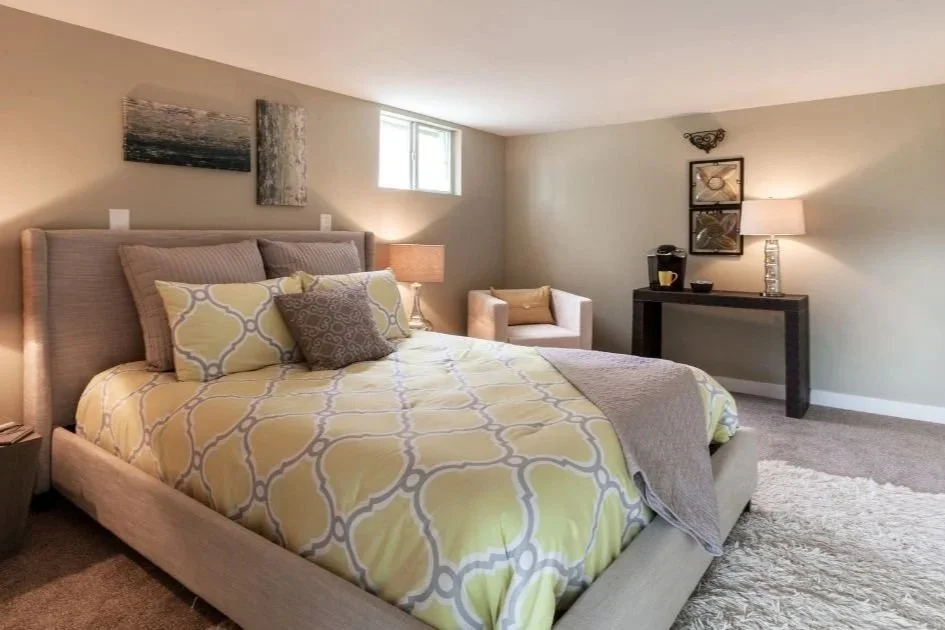
When homeowners begin thinking about finishing or remodeling a basement, a guest suite is often one of the most practical and rewarding ideas. It adds comfort, privacy, and flexibility without changing the footprint of the home. For many families in the Greater St. Louis area, it can turn an underused lower level into one of the most welcoming spaces in the house.
How to Convert a Basement Into a Guest Suite
To convert a basement into a guest suite, start with a clear design plan that includes a comfortable sleeping area, a code-compliant egress window or exit, proper moisture control, quality insulation, durable flooring, layered lighting, and, when possible, a private bathroom or kitchenette. The best basement guest suites are not simply finished rooms with a bed added later. They are carefully planned living spaces built with the same attention to comfort, safety, proportion, and craftsmanship as the main level of the home.
That distinction matters.
A basement has its own personality. It sits below grade. It usually has lower natural light. It may have mechanical systems, support posts, foundation walls, plumbing lines, and existing constraints that need to be respected. A successful basement guest suite works with those conditions instead of fighting them. The goal is to create a space that feels intentional, not improvised.
At Morganco Design Build, we look at a basement guest suite the way a craftsman studies a piece of raw material. There is potential there, but it takes skill to bring it forward properly. The framing, lighting, waterproofing, trim, cabinetry, bathroom layout, and finish selections all have to work together. When they do, the basement stops feeling like a basement and begins feeling like a private retreat.
Start With a Basement Design Plan That Feels Like a True Extension of the Home
A well-built guest suite should feel connected to the rest of the house in quality, style, and comfort. That does not mean it has to copy every detail from the main floor. It does mean the proportions, materials, and finishes should feel like they belong.
In many St. Louis homes, especially in areas like Kirkwood, Webster Groves, Ladue, Chesterfield, Town and Country, and Frontenac, basements can vary widely. Some have generous ceiling heights and walkout access. Others have tighter layouts, older mechanical systems, or foundation conditions that require careful planning. The right design approach starts with understanding the home itself.
A lower level in a newer West County home may have room for a bedroom, full bath, sitting area, and wet bar. A basement in an older Webster Groves or University City home may require more creativity, especially around ceiling height, ductwork, and natural light. Both can become beautiful guest suites, but each calls for a different design solution.
That is where thoughtful planning makes all the difference. Before finishes are selected, the layout needs to answer practical questions:
Where will guests sleep comfortably?
Can the space support a private bathroom?
Is there a safe and code-compliant egress point?
How will natural and artificial light work together?
Where will luggage, linens, and personal items be stored?
How will the suite feel quiet, warm, and private?
These are not small details. They shape the entire experience of the room.
READ: How Much Does It Cost to Finish a Basement in Missouri?
Evaluate Ceiling Height, Moisture, Lighting, and Layout Before Building
A basement guest suite has to be beautiful, but it also has to perform. That performance begins behind the walls and beneath the floor.
Before construction begins, the basement should be evaluated for moisture, cracks, drainage concerns, insulation needs, and mechanical limitations. A guest suite is meant to be comfortable enough for overnight stays, which means it cannot feel damp, cold, dark, or unfinished around the edges.
Ceiling height is another important factor. Ductwork, beams, plumbing runs, and recessed lighting all affect how open the space feels. A skilled design-build team will look at ways to preserve height where it matters most, conceal mechanicals cleanly, and use ceiling details to create order rather than visual clutter.
Lighting deserves the same attention. Since many basements have limited natural light, the artificial lighting plan has to carry more weight. Recessed lights alone rarely create the right atmosphere. A guest suite benefits from layers: ambient ceiling lighting, bedside sconces, vanity lighting, undercabinet lighting in a kitchenette, and softer accent lighting in seating areas. The result should feel warm and composed, not flat or overly bright.
Build Around Comfort, Privacy, and Long-Term Function
A basement guest suite should make visitors feel cared for. That is the heart of the project.
A comfortable bedroom area gives guests a quiet place to rest. A nearby bathroom makes the space more private and convenient. A sitting area gives them somewhere to read, watch television, or enjoy coffee without feeling like they are intruding on the household. Even small details, like a built-in closet, extra outlets, a luggage bench, or a linen cabinet, can make the space feel polished and complete.
The best guest suites are also designed for the way life changes. Today, the space may be used for visiting relatives during the holidays. A few years from now, it may serve an aging parent, a college-age child returning home, or long-term guests. When the design is handled with foresight, the basement becomes more than extra square footage. It becomes flexible, lasting value.
Why a Basement Guest Suite Is One of the Smartest Remodeling Investments for St. Louis Homeowners
A basement guest suite solves a common problem in a refined way: the home needs more usable space, but the family does not necessarily want to move or build an addition.
For many homeowners in the Greater St. Louis area, the basement is the largest unfinished or underused space they already own. It may hold storage boxes, seasonal décor, workout equipment, or a rarely used play area. With the right design and construction, that same square footage can become a private, comfortable guest retreat.
More Livable Space Without Changing the Home’s Footprint
One of the strongest advantages of a basement remodel is that it works within the existing structure. Instead of expanding outward, the home expands inward. That can be especially valuable in established St. Louis neighborhoods where lot sizes, architectural character, or municipal requirements may make additions more complex.
A finished basement guest suite can add a bedroom, bathroom, lounge space, storage, and even a kitchenette without altering the exterior profile of the home. The project still requires careful planning, but it can often create substantial living value within space that is already there.
The key is to avoid treating the basement as leftover square footage. A well-designed lower level should have the same sense of purpose as a kitchen remodel, primary suite renovation, or custom addition. The framing should be square. The trim should be crisp. The tile should be set cleanly. The lighting should be deliberate. The finished result should feel worthy of the rest of the home.
A Better Way to Host Family, Friends, and Overnight Guests
Hosting overnight guests can be enjoyable, but it can also create pressure when the home does not have the right setup. A guest bedroom on the main floor may be too close to busy living areas. A spare room upstairs may feel cramped or inconvenient. A pullout sofa in an office works for one night, but it does not feel gracious for a longer stay.
A basement guest suite changes that experience.
Guests have their own space to unwind. Homeowners keep their daily routines intact. Children can go to bed upstairs while grandparents relax downstairs. Visiting friends can enjoy privacy without feeling disconnected. It is a thoughtful improvement because it considers both sides of hospitality: the comfort of the guest and the ease of the host.
That kind of planning is where design-build craftsmanship becomes personal. The work is not only about walls and finishes. It is about how people will move through the space, where they will place a suitcase, how they will reach the bathroom at night, and what the room will feel like on a quiet morning.
Added Flexibility for Aging Parents, College-Age Children, and Extended Stays
A basement guest suite can also support multigenerational living. Many St. Louis families want a home that can adapt as parents age, children return from college, or relatives stay for longer periods.
A private lower-level suite can offer independence while keeping loved ones close. Depending on the basement layout, it may include a bedroom, full bathroom, sitting area, kitchenette, and storage. In a walkout basement, it may even have a more private entry.
These decisions should be made carefully. A space intended for occasional weekend guests may not need the same features as one designed for extended stays. Wider pathways, a curbless or low-threshold shower, slip-resistant flooring, better lighting, and easy-access storage can make the suite more comfortable for a wider range of users.
Good remodeling anticipates tomorrow without overcomplicating today.
Phase One: Planning the Basement Guest Suite Layout
The layout is the foundation of the entire basement guest suite. Before tile, flooring, paint colors, or cabinetry are discussed, the floor plan needs to be right.
A beautiful finish cannot rescue an awkward layout. If the bathroom is too far from the bedroom, if the closet is too small, if the bed wall feels forced, or if the lighting does not match the way the space will be used, the suite will always feel slightly off. Quality begins with proportion, flow, and purpose.
READ: Basement Remodel Ideas for Missouri Homes
Define the Suite’s Purpose Before Choosing Finishes
The first question is simple: who will use the space most often?
A guest suite for occasional weekend visitors may only need a bedroom, bathroom, and small sitting area. A suite for aging parents may require more accessible design choices. A lower-level retreat for adult children may benefit from a kitchenette, desk area, and more storage. A guest suite near a basement bar or entertainment area may need stronger sound separation and a more private bedroom location.
Purpose guides every design decision.
For example, a homeowner in Chesterfield with a large walkout basement may want a guest suite that feels almost like a boutique hotel room, complete with a sleeping area, full bath, coffee bar, and lounge. A family in Kirkwood may need a more compact suite that fits within an older basement footprint while preserving storage and mechanical access. Both projects can be highly successful, but they should not be designed the same way.
A skilled remodeler studies the house, the homeowners, and the intended use before drawing the final plan.
Create a Natural Flow Between Sleeping, Bathing, Storage, and Living Areas
A guest suite should feel easy to use. That sounds obvious, but it takes discipline to design well.
The sleeping area should feel protected and quiet. The bathroom should be close enough for convenience but placed so the door does not open awkwardly into the bed area. Storage should be easy to reach. If there is a sitting area, it should feel like part of the suite rather than leftover space outside the bedroom.
Flow matters because guests are navigating an unfamiliar part of the home. Thoughtful design makes the experience intuitive.
A few smart layout decisions can elevate the entire suite:
A short hallway can create privacy between the bedroom and common basement areas.
A pocket door can save space where a swing door would feel crowded.
A built-in linen cabinet can make the bathroom more functional.
A recessed niche near the bed can replace bulky furniture in a smaller room.
A coffee bar near the sitting area can give guests independence without requiring a full kitchen.
These are the kinds of refinements that separate a basic basement finish from a custom basement remodel.
Think Through Egress, Access, and Everyday Convenience
For a basement bedroom, egress is essential. Guests need a safe way to exit in an emergency, and the bedroom must be planned around code requirements. This often involves an egress window, window well, or walkout condition, depending on the home.
Access also matters. If guests enter through the main level and walk downstairs, the stairway should feel finished, well-lit, and connected to the suite. If the basement has a walkout, the design may be able to create a more private arrival experience.
Everyday convenience should be planned at the same time. Outlets near the bed, a switch at the entry, dedicated reading lights, a place to charge phones, enough closet space, and a logical path to the bathroom all contribute to the comfort of the suite.
Luxury is often found in the details that guests do not have to think about.
Phase Two: Addressing Moisture, Insulation, and Basement Comfort
The most important parts of a basement remodel are often the parts homeowners never see once the work is complete.
A basement guest suite needs to be dry, insulated, quiet, and comfortable. If those fundamentals are ignored, even the most beautiful finishes can fail. Flooring may cup. Paint may peel. The room may feel cold. A bathroom may hold humidity. Guests may notice musty air instead of fine craftsmanship.
At Morganco Design Build, this is where pride in the craft matters. We believe a remodel should be built correctly from the inside out.
Why Basement Waterproofing Comes Before Beautiful Finishes
Moisture control should always be addressed before framing and finish materials are installed. Basements are below grade, which means they are more vulnerable to water intrusion, humidity, and vapor movement.
The specific solution depends on the condition of the home. Some basements may only need minor crack repairs, improved drainage, or humidity control. Others may require more substantial waterproofing measures. The important point is that these issues should be discovered and handled early, not hidden behind new drywall.
A professional assessment may look at:
Foundation cracks
Signs of past water intrusion
Sump pump condition
Exterior grading
Gutter and downspout drainage
Humidity levels
Floor slab condition
Window wells
Mechanical ventilation
This step is not glamorous, but it protects the investment. A finished basement guest suite should be built to last, not just look good on the day the project is completed.
Insulation, Sound Control, and Temperature Balance
Basements can feel cooler than the rest of the house, especially during St. Louis winters. Good insulation helps regulate temperature and improves comfort. It can also make the space feel more finished and quiet.
Insulating exterior foundation walls properly is important, but so is thinking about sound. A guest suite may sit below a kitchen, family room, or children’s bedrooms. Without thoughtful sound control, footsteps, plumbing noise, or television sound can travel between floors.
Depending on the project, sound-conscious construction may include insulation in ceiling cavities, resilient channels, solid-core doors, careful duct planning, and strategic room placement. These decisions may not be obvious when looking at a finished photo, but they are felt every time someone uses the space.
Temperature balance should also be discussed. The HVAC system needs to support the new finished area. In some homes, existing supply and return air may be enough with modifications. In others, supplemental solutions may be worth considering. A guest suite should not feel like a separate climate zone unless it is intentionally designed that way.
Choosing Materials That Perform Below Grade
Not every material belongs in a basement. A quality basement guest suite uses materials that are both beautiful and appropriate for below-grade conditions.
Luxury vinyl plank, engineered hardwood rated for below-grade use, tile, and certain carpet systems may all be considered depending on the design goals and moisture conditions. The best choice depends on the basement, the intended use, and the level of durability needed.
For walls, trim, cabinetry, and bathroom materials, the same thinking applies. Selections should be made with an understanding of humidity, cleaning, wear, and long-term performance.
A guest suite should feel refined, but it should also be practical. The craft is in balancing both.
Phase Three: Designing the Bedroom Area
The bedroom is the heart of the basement guest suite. It should feel calm, private, and complete. Because basement bedrooms have special safety and comfort requirements, this space deserves careful attention from the earliest design stage.
Proper Egress and Safety Requirements
Any true basement bedroom needs proper egress. This is one of the most important planning requirements in a basement guest suite conversion. A safe exit route may involve an egress window with a properly sized opening and window well, or a walkout door if the basement conditions allow.
Beyond code, egress can also improve the quality of the room. A larger window brings in natural light, makes the bedroom feel less enclosed, and gives the space a more welcoming character. In many St. Louis basements, adding or upgrading an egress window is one of the most valuable improvements in the entire project.
The placement of the egress window affects the rest of the design. It can influence where the bed goes, how furniture is arranged, and where lighting is needed. A thoughtful plan treats the egress feature as part of the room’s architecture, not just a requirement to check off a list.
Lighting Strategies for a Warm, Comfortable Sleeping Space
Basement bedroom lighting should be soft, layered, and flexible. Since natural light may be limited, the lighting design has to create comfort throughout the day and evening.
A strong lighting plan may include recessed ceiling lights for general illumination, wall sconces or pendant lights near the bed, a dimmer system, closet lighting, and accent lighting near built-ins or artwork. The goal is to avoid the harsh, flat feeling that can happen when a basement relies on a single overhead fixture.
In a well-designed guest bedroom, lighting makes the room feel warmer and more spacious. It also gives guests control. They can read in bed, turn down the lights at night, or use soft lighting in the morning without waking the entire household.
Built-In Storage, Trim Details, and Finish Carpentry
Storage is one of the details that makes a guest suite feel complete. A closet is important, but built-ins can add another level of comfort and craftsmanship.
A built-in wardrobe, window bench, luggage shelf, or custom nightstand can be designed to fit the room precisely. This is especially useful in basements where posts, soffits, or foundation conditions create unique dimensions. Instead of forcing store-bought furniture into an imperfect space, custom carpentry can make the architecture feel intentional.
Trim details also matter. Clean casing around doors and windows, properly proportioned baseboards, carefully installed crown or ceiling details, and quality door hardware all contribute to the finished impression. A guest may not name every detail, but they will feel the difference.
That is the quiet power of skilled workmanship.
Phase Four: Adding a Basement Bathroom
A private bathroom can turn a finished basement bedroom into a true guest suite. It gives visitors comfort and independence, and it prevents the household from having to share upstairs bathrooms during overnight stays.
Adding a basement bathroom requires technical planning and precise execution. Plumbing, ventilation, waterproofing, lighting, tile work, and fixture selection all have to work together.
Plumbing Considerations for Below-Grade Bathrooms
Basement bathrooms can be more complex than bathrooms on upper floors because plumbing may need to work below the home’s main sewer line. Depending on the existing conditions, the project may require breaking concrete, relocating drains, installing a sewage ejector system, or tying into existing rough-ins.
Some newer St. Louis-area homes may already have basement bathroom rough-ins, which can simplify the process. Older homes may require more extensive planning. Either way, the plumbing layout should be designed carefully before construction begins.
The location of the bathroom often depends on existing plumbing, but it should not be placed solely for convenience to the contractor. It still needs to serve the guest suite well. The best solution balances plumbing efficiency with comfort, privacy, and design.
Shower, Vanity, Tile, and Fixture Selections
The bathroom should feel elevated but not overdone. Guests need a space that is easy to use, easy to clean, and pleasant to spend time in.
A walk-in shower is often a strong choice for a basement guest suite. It can feel more refined than a basic tub-shower combination and may be easier for many guests to access. Tile selection should consider slip resistance, scale, grout maintenance, and the overall mood of the suite.
A custom vanity can add warmth and storage. Stone or quartz countertops offer durability. Quality plumbing fixtures, proper shower glass, well-placed towel bars, and a recessed niche all contribute to a bathroom that feels carefully built.
Tile work is one of the clearest places where craftsmanship shows. Straight lines, balanced cuts, clean corners, proper waterproofing behind the tile, and thoughtful transitions separate a professional bathroom from one that simply looks finished from a distance.
Ventilation and Moisture Control
Ventilation is especially important in a basement bathroom. Moisture needs a reliable path out of the space. A properly sized exhaust fan, correct ducting, and smart humidity control help protect finishes and improve comfort.
This is another area where what happens behind the walls matters. The fan should not simply be installed because a bathroom needs one. It should be selected and placed with purpose. The duct path should be planned. The switch location should make sense. The room should dry out properly after a shower.
A basement guest suite is only successful if it remains comfortable and fresh over time.
Phase Five: Creating a Sitting Area, Coffee Bar, or Small Kitchenette
A basement guest suite does not always need a full kitchenette, but a small hospitality zone can make the space feel significantly more comfortable.
This might include a coffee bar, undercounter refrigerator, microwave drawer, sink, open shelving, or custom cabinetry. The right choice depends on how the suite will be used and how much space is available.
Guest Comfort Without Overbuilding the Space
It can be tempting to add every possible feature, but good design requires restraint. The suite should serve guests well without making the basement feel crowded or overbuilt.
For occasional visitors, a simple coffee bar with a small refrigerator and storage for mugs, snacks, and bottled water may be enough. For longer stays, a more complete kitchenette may be worth considering. If the basement already includes a bar or entertainment area, the guest suite may only need a small private refreshment area nearby.
The best design feels generous, not excessive. Every element should earn its place.
Cabinetry, Countertops, and Appliance Planning
Cabinetry should be planned with the same care as a kitchen or bath. Even a small kitchenette can look refined when the cabinet proportions, hardware, countertop, backsplash, and lighting are thoughtfully coordinated.
In a basement guest suite, durable materials are especially useful. Quartz countertops, quality cabinet boxes, soft-close hardware, and easy-to-clean backsplash materials can make the space feel polished and practical.
Appliance planning should happen early. Undercounter refrigerators, microwaves, beverage centers, and sinks all require electrical or plumbing coordination. Waiting too long to make these decisions can lead to compromises in layout or finish quality.
Designing a Suite That Feels Thoughtful, Not Pieced Together
A guest suite should not feel like a collection of unrelated features. The bedroom, bathroom, sitting area, and kitchenette should feel connected through materials, colors, trim profiles, and lighting.
For example, the same cabinet finish used in the bathroom vanity might appear in the coffee bar. The tile palette might complement the flooring. The wall color might shift slightly between spaces while still feeling cohesive. Hardware and lighting finishes can be repeated in subtle ways.
These connections create a sense of design maturity. The space feels planned from the beginning, not assembled in stages.
Phase Six: Lighting, Flooring, and Finish Details
The final layers of a basement guest suite determine how the space feels day to day. Lighting, flooring, paint, trim, doors, and hardware are not afterthoughts. They are the details homeowners and guests interact with constantly.
Layered Lighting for a Basement Guest Suite
Basements need especially thoughtful lighting because they often lack the natural brightness of upper floors. A strong lighting plan uses layers.
Ambient lighting provides general visibility. Task lighting supports reading, grooming, or preparing coffee. Accent lighting adds warmth and dimension. Dimmers give guests control over mood and brightness.
In a guest suite, that might mean recessed lighting in the sitting area, sconces beside the bed, vanity lighting in the bathroom, LED lighting under kitchenette cabinets, and a statement fixture in a small lounge area. Each fixture should be selected for both performance and design.
A well-lit basement does not feel artificial. It feels comfortable.
Flooring That Handles Basement Conditions Beautifully
Flooring has to be chosen with basement realities in mind. It should feel good underfoot, handle moisture conditions appropriately, and support the style of the suite.
Luxury vinyl plank is a popular choice because it offers durability, water resistance, and a wide range of styles. Tile can work beautifully in bathrooms, entries, and kitchenette areas. Carpet may be considered in bedroom zones when moisture conditions are well controlled and the right product is selected.
Transitions are important. Flooring changes should be clean and intentional, especially between bedroom, bathroom, and living areas. A careless transition can make even expensive flooring look unfinished. A precise transition makes the suite feel tailored.
Millwork, Doors, Hardware, and Paint Choices
Finish carpentry gives the space its final character. Baseboards, casing, door styles, built-ins, crown details, and paneling can all add depth and craftsmanship.
Solid-core doors are often worth considering for privacy and sound control. Quality hardware improves the feel of the space every time a door opens or closes. Paint colors should be selected with basement lighting in mind. Colors that look bright upstairs may feel dull below grade, while warm neutrals, soft whites, deep accents, and carefully chosen trim colors can create richness.
This is where a design-build approach shines. The design vision and the construction details are not separated. They are coordinated from concept to completion.
Phase Seven: Permits, Code, and Skilled Basement Remodeling in St. Louis
A basement guest suite is not just a cosmetic project. It often involves structural considerations, electrical work, plumbing, HVAC adjustments, egress requirements, and local building codes.
Professional planning protects both the homeowner and the finished result.
Why Professional Planning Matters
A quality basement remodel begins long before construction starts. Measurements need to be accurate. Existing conditions need to be understood. The design needs to account for code, comfort, materials, mechanical systems, and the homeowner’s goals.
This is especially important in the Greater St. Louis area, where homes range from historic properties with stone foundations to newer custom homes with walkout basements. Each home requires a different level of investigation and planning.
Professional planning helps prevent costly surprises. It also allows the design team to solve problems creatively instead of reacting to them under pressure.
Common Code Considerations for Basement Guest Suites
While specific requirements can vary by municipality, basement guest suites commonly involve code considerations related to bedroom egress, ceiling height, smoke and carbon monoxide detection, electrical outlets, bathroom ventilation, stair safety, plumbing, and permitted work.
These details are not obstacles to good design. They are part of responsible building.
A skilled contractor understands how to integrate code requirements into the finished design cleanly. An egress window can become an attractive source of natural light. Required lighting can become part of a layered lighting plan. Ventilation can be handled discreetly. Safety and beauty should work together.
The Value of Working With a Design-Build Contractor
A design-build contractor brings design and construction under one coordinated process. For a basement guest suite, that coordination is valuable because so many decisions affect one another.
The bathroom location affects plumbing. Plumbing affects concrete work. Ceiling height affects lighting. Lighting affects mood. Egress affects bedroom layout. Cabinetry affects electrical planning. Finish selections affect durability and maintenance.
When design and construction are handled together, the project can move with more clarity. The homeowner has a team thinking through the whole picture, not separate pieces.
At Morganco Design Build, that level of care reflects who we are: builders who respect the craft, value precision, and understand that a home remodel is personal. We are not just creating a finished basement. We are shaping a space where family and guests will feel welcomed for years.
What Makes a Basement Guest Suite Feel High-End
A high-end basement guest suite is not defined by expensive materials alone. It is defined by how well every decision fits the home, the space, and the people who will use it.
Craftsmanship That Shows in the Small Details
The difference between average and exceptional remodeling often appears in the details.
Are the tile lines straight?
Do the doors close solidly?
Are the trim joints tight?
Does the lighting feel balanced?
Are the built-ins proportioned correctly?
Do the flooring transitions feel seamless?
Does the bathroom feel properly waterproofed and ventilated?
Does the finished space feel like it belongs to the home?
These details require patience and pride. They are the marks of a team that does not rush through the work just to call it done.
Custom Design Decisions That Fit the Home
A guest suite should be designed for the specific basement, not copied from a generic plan. Every home has its own structure, style, and possibilities.
In a traditional Ladue home, the design may lean toward classic millwork, warm finishes, and understated elegance. In a newer Town and Country home, the suite may include cleaner lines, a spa-like bathroom, and a more open lounge area. In a Kirkwood home, the solution may involve creative built-ins and careful use of every square foot.
Custom design does not always mean elaborate. It means appropriate. It means the finished space feels considered.
Balancing Luxury With Practical Durability
A guest suite should feel comfortable and refined, but it also needs to hold up to real use. Guests will roll suitcases across the floor, use the shower, set drinks on surfaces, open cabinets, and move through the space in ways that test the quality of the remodel.
Durable flooring, washable paint, quality cabinetry, strong ventilation, well-made fixtures, and properly installed materials all help the suite age gracefully.
True luxury is not fragile. It is built to be lived in.
Converting a basement into a guest suite is one of the most meaningful ways to add comfort and function to a home. It gives guests privacy, gives homeowners flexibility, and turns underused square footage into a space with purpose.
But the success of the project depends on the care behind it. Moisture control, insulation, layout, egress, plumbing, lighting, materials, and finish details all matter. Each choice affects how the suite looks, feels, and performs over time.
For homeowners in the Greater St. Louis area, a basement guest suite can be more than a remodeling project. It can be a beautifully crafted extension of the home, designed for hospitality, family, and long-term value.
At Morganco Design Build, we believe that every detail should serve the finished result. The framing behind the wall matters. The tile beneath your feet matters. The way light falls across the room matters. A guest suite should feel welcoming from the first step downstairs and dependable for years to come.
That is the difference thoughtful design and skilled craftsmanship make.